Product Description
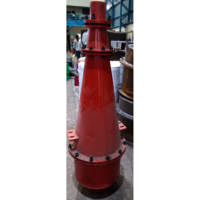
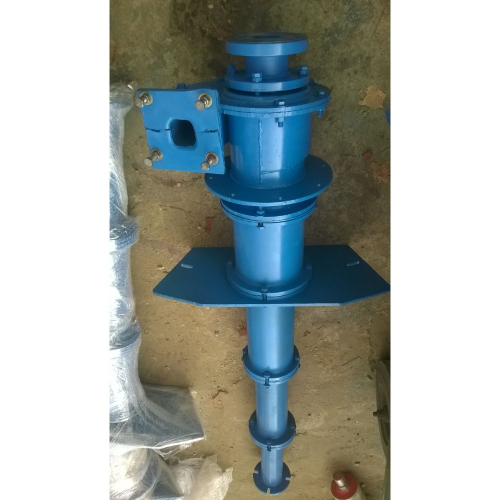
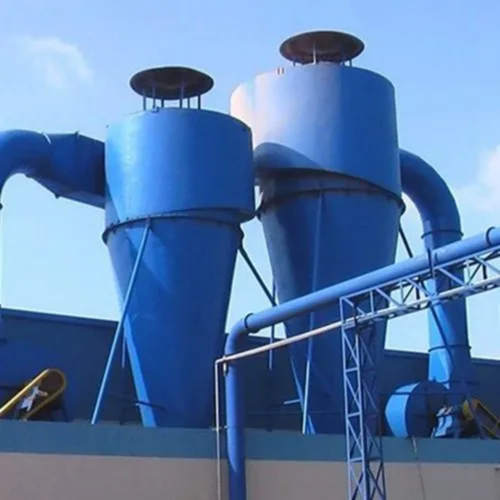
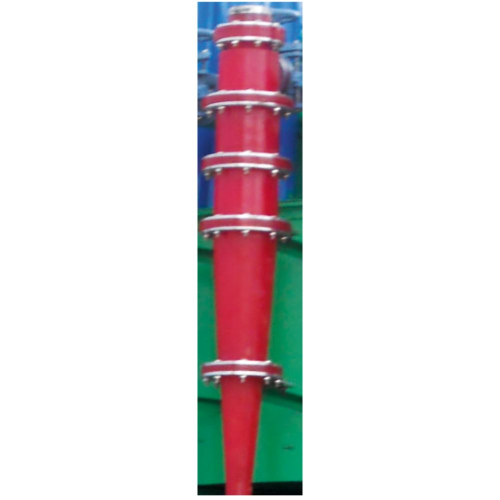
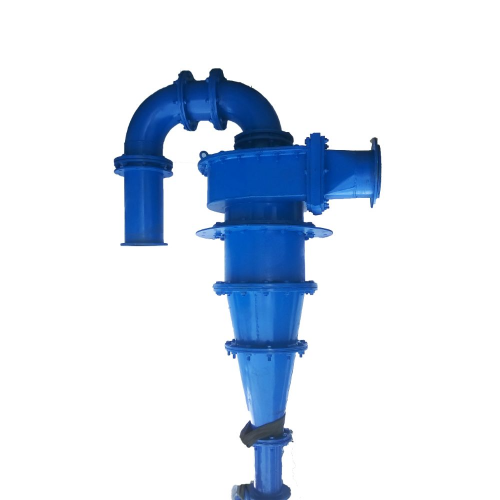
Hydrocyclones
Hydrocyclones
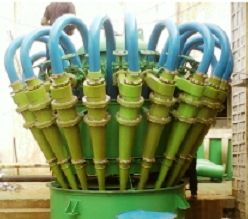
We manufacture Hydrocyclones as per customer requirement
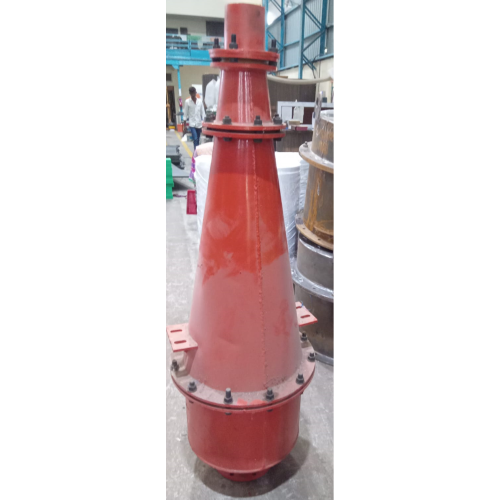
A hydrocyclone is a device to classify/separate or sort particles in a liquid suspension based on the densities of the particles. A hydrocyclone may be used to separate solids from liquids or to separate liquids of different density.
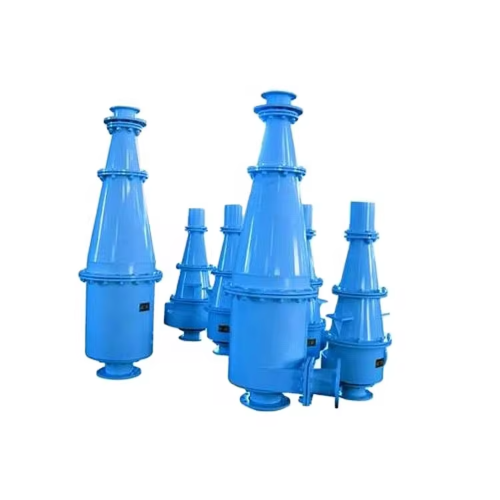
A hydrocyclone will normally have a cylindrical section at the top where liquid is being fed , and a base. The angle, and hence length of the conical section, plays a role in determining operating characteristics.
A hydrocyclone has two exits on the axis: the smaller on the bottom (underflow or reject) and a larger at the top (overflow or accept). The underflow is generally the denser or thicker fraction, while the overflow is the lighter or more fluid fraction.
Internally, centrifugal force is countered by the resistance of the liquid, with the effect that larger or denser particles are transported to the wall for eventual exit at the reject side with a limited amount of liquid, whilst the finer, or less dense particles, remain in the liquid and exit at the overflow side through a tube extending slightly into the body of the cyclone at the center.
Forward hydrocyclones remove particles that are denser than the surrounding fluid, while reverse hydrocyclones remove particles that are less dense than the surrounding fluid. In a reverse hydrocyclone the overflow is at the apex and the underflow at the base. There are also parallel flow hydrocyclones where both the accept and reject are removed at the apex. Parallel-flow hydrocyclones remove particles that are lighter than the surround fluid.
Orithane cyclone distributors
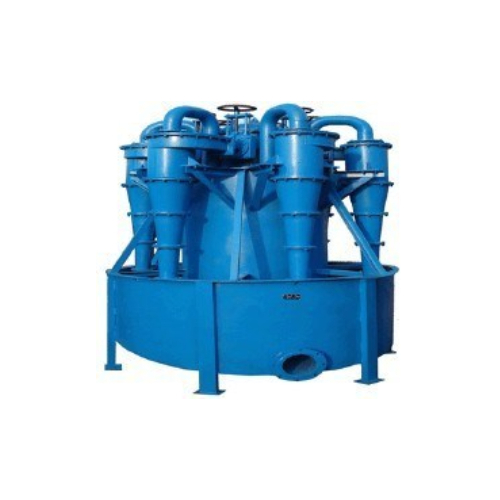
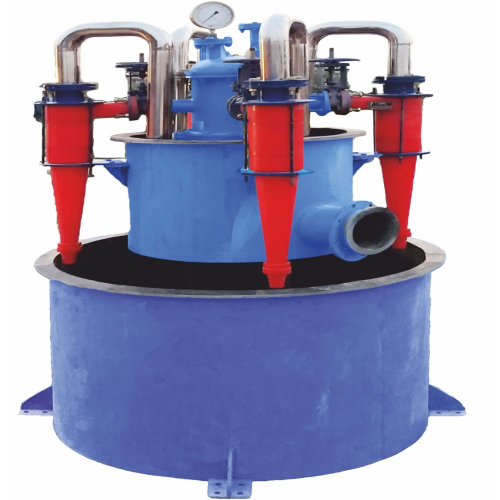
Require 3 connections i.e. feed, overflow discharge and underflow discharge. Compact design to reduce floor area requirement while providing sufficient room for access and maintenance. Isolation valves provided at shoulder height with sufficient access for easy operation. Underflow land\launder installed at floor level for visual inspection of spigot discharge and easy access for maintenance.
Feed distributor
Radial or in-line to ensure equal solids and liquid distribution to each cyclone for equal cyclone performance. 2 to 62 outlets available. All internal surface lined with an abrasion resistant wear liner. Replaceable sole polyurethane wear pad to protect wear liner and increase operating life. Supplied with pressure gauge to monitor cyclone operation.
Cyclones
Designed to accommodate cyclones from 40mm to 900mm. isolation valves provided to enable cyclones to be isolated for maintenance or operational reasons.
Overflow tank/lauder
Individual cyclone overflow discharge into a common overflow. Overflow tank is lined with a suitable abrasion resistant liner. An outlet of sufficient diameter is provided to enable maximum slurry flow rate to discharge under gravity. A removable splash cover is provided to minimize splashing/spray.
Underflow tank/launder
Individual cyclone spigots discharge into a common underflow launder. Underflow tank is lined with a suitable abrasion resistant liner i.e. urethane. Natural rubber or ceramics. A large outlet is provided and the base is angled between 10 and 45 degrees to ensure the dense spigot product can discharge under gravity. A removable splash cover can be provide to minimize any spray/splashing present.
The unique scrolled evolute inlet design.
The heart of the orithane dense medium cyclone.
Through extensive testing and simulations. Orithane process equipment has proven that the scrolled evolute inlet design has a higher capacity when compared to other inlet designs. The scrolled evaluate inlet design substantially reduces vortex finder wear, reducing operating costs and maintaining cyclone efficiency.
Material of construction
Cyclones are available in a wide range of materials depending on cyclone diameter, top size and material being treated.
Available materials are:
Polyurethane
A special abrasion resistant polyurethane which under certain conditions can give three times more life than rubber.
Cast iron
A 27% high chrome cast iron which provides excellent abrasion resistance for most applications.
Silicon carbide
Liners manufactured from nitride bonded silicon carbide which provides superior abrasion resistance for softer and smaller particle applications.
Alumina
Engineered alumina tiles with 94% alumina which is suited to coarse particle high wearing applications.
Hybrid alumina and cast iron
Used in alumina lined cyclones where tramp metal is present. The cone sections are supplied in high chrome cast iron which is better suited to handling tramp metal.
High-efficiency inlet designs
The heart of the orithane cyclone range.
Through extension testing and simulations. Orithane process equipments has proven that both the scrolled evolute and ribbon inlet designs have a higher capacity when compared to other inlet designs. These designs substantially reduce vortex finder wear, thereby reducing operating costs whilst maximizing cyclone efficiency.
General features:
Lightweight overflow elbow
Overflow elbows are made from an abrasion-resistant polymer. That is lightweight, Requires no corrosion protection and is cost-effective a rubber/urethane sleeve is fitted to reduce wear at the vortex finder discharge.
Vortex finders
The scrolled evolute and ribbon inlet designs reduce vortex finder wear to the degree that polyurethane or rubber lined vortex finders can be used cost-effectively.
Loose liners
All wetter surface are lined with 15 or 25mm thick loose replaceable rubber liners. Which have up to three times more life than conventional liners. This reduces operating costs. Maintenance and stock holdings, alternative liners. Such as polyurethane and silicon carbides, are available. For extremely abrasive applications housings lined with 25mm alumina tiles can be supplied
Weep holes prevent damage to housings
Outer housings are fitted with weep holes located in the highest wear areas. Slurry dripping from the weep holes gives an early indication that the liner needs replacing. Preventing housing wear.
HC and HR cyclones incorporate mild steel shell housings. While PC cyclones incorporate lightweight. Rust-resistant, fibre-reinforced composite housings.
Spigot
The spigot is housed in a light weight holder. The design of which enables easy inspection or replacement of the spigot. Inserts are available in polyurethane or silicon carbide.
Cyclone distributors
We offer distributors for larger, multiple cyclone operations. These assembles have been designed to ensure optimum cyclone operation and are extremely compact.
Exceptional Durability in Abrasive EnvironmentsOur polyurethane hydrocyclones are engineered to withstand intense wear thanks to a robust polyurethane lining. Designed for use in harsh applicationslike mining, sand washing, and chemical processingtheir long service life means fewer replacements and lower operational costs.
Versatile and Customizable Filtration SolutionsAvailable in diameters from 10 mm to 500 mm, with custom mesh options and various end connections, these hydrocyclones adapt seamlessly to your system. The conical, seamless body ensures reliable performance and is available in yellow or alternate colors on request.
Efficient Separation and Easy MaintenanceAchieving up to 95% efficiency, these devices ensure effective separation of solids from liquids, maximizing productivity. Their leak-proof design and low maintenance needscoupled with manual or automated cleaningmake them a preferred solution across multiple industries.
FAQs of Hydrocyclones Polyurethane:
Q: How does a polyurethane hydrocyclone function in industrial applications?
A: Polyurethane hydrocyclones utilize a conical design to separate solid particles from liquid media by centrifugal force. Slurry enters the hydrocyclone at high speed, causing solids to move outward to the wall and spiral downward, while clean liquid exits from the center. This makes them highly effective for use in mining, sand washing, chemical, coal, and aggregate industries.
Q: What benefits does polyurethane construction provide for hydrocyclones?
A: Polyurethane offers outstanding wear resistance and corrosion-proof characteristics, making these hydrocyclones highly durable even in abrasive or chemically aggressive environments. Their smooth inner surface minimizes blockage and extends service life while reducing the need for frequent maintenance.
Q: When is it advisable to use a custom mesh or diameter size?
A: Custom mesh and diameter sizes are recommended when specific particle size separation or system flow rate requirements must be met. This adaptability allows these hydrocyclones to efficiently process a range of media types and particulates found in diverse industrial applications.
Q: Where can these hydrocyclones be installed and with which mounting options?
A: These hydrocyclones can be installed vertically or horizontally, depending on your operational needs. Their end connections accommodate both flanged and plain ends, ensuring compatibility and ease of integration with new or existing piping systems.
Q: What is the typical process for cleaning and maintaining these hydrocyclones?
A: The hydrocyclones require minimal maintenance due to their robust design, but cleaning can be performed manually or automatically depending on the setup. Regular inspection of the smooth polyurethane lining ensures consistent performance and prevents premature wear.
Q: How does the leak-proof joint design benefit ongoing operation?
A: The leak-proof joint design eliminates the risk of slurry escape, reducing downtime, environmental risks, and material loss. This enhances overall reliability and contributes to lower operational costs over time.
Q: What makes these hydrocyclones a high-efficiency solution for slurry separation?
A: With efficiency ratings of up to 95%, the hydrocyclones swiftly and precisely separate solids from liquids, ensuring cleaner process fluids and improved operational throughputcrucial for industries requiring continuous and reliable filtration.





 Send Inquiry

 Send Inquiry
 Send SMS
 English
 Spanish
 French
 German
 Italian
 Chinese (Simplified)
 Japanese
 Korean
 Arabic
 Portuguese